Home Why arbitrIQ How It Works Conceptual Framework Practical Walkthrough More Trust & Security For Consultants Pricing FAQ Get Started

For decisions that are expensive to reverse

See what happens after the decision.
Before the consequences become real.

arbitrIQ simulates how high-stakes decisions may play out, using structured AI contradiction to expose assumptions, risks, second-order effects, and blind spots before they become expensive.

Designed for decisions where reversal is costly: acquisitions, major investments, market entry. Use it before committing, or after a preferred option has emerged, to understand what is likely to happen next.

Structured adversarial analysis across multiple AI models
Surface blind spots before capital or strategic commitment
Decision-ready reports with evidence trails, scoring and rationale
GDPR-native (EU company)
Your data never trains models
Anthropic · OpenAI · Google

arbitrIQ

The real danger isn't bad ideas.
It's decisions whose consequences were never properly simulated.

Every strategic proposal carries implicit beliefs about what will happen next: market reactions, execution capacity, competitor moves, regulatory exposure, financial resilience, and organizational alignment.

Most failed decisions looked justified when they were approved.

When assumptions are not systematically challenged, confidence replaces rigor — and unmanaged risk becomes invisible.
Why this matters →
Walking on thin ice — the danger of untested assumptions

Leaders face an uncomfortable trade-off.

Option A: Rely on internal reasoning, limited debate, and time pressure — fast, but risks blind spots.

Option B: Engage external strategic consultants — rigorous, but slow and expensive.

Leaders choose between speed without structure — or structure without speed. arbitrIQ eliminates that trade-off.
Leader facing the speed vs. rigor trade-off

What if you could simulate what happens next
before you commit?

arbitrIQ uses structured contradiction to simulate the future your decision depends on.

Every argument must survive opposition. The result: decisions backed by rigorous, multi-perspective analysis — not just intuition.

Five steps to a defensible decision

From question to decision-ready report

1

Input & Planning

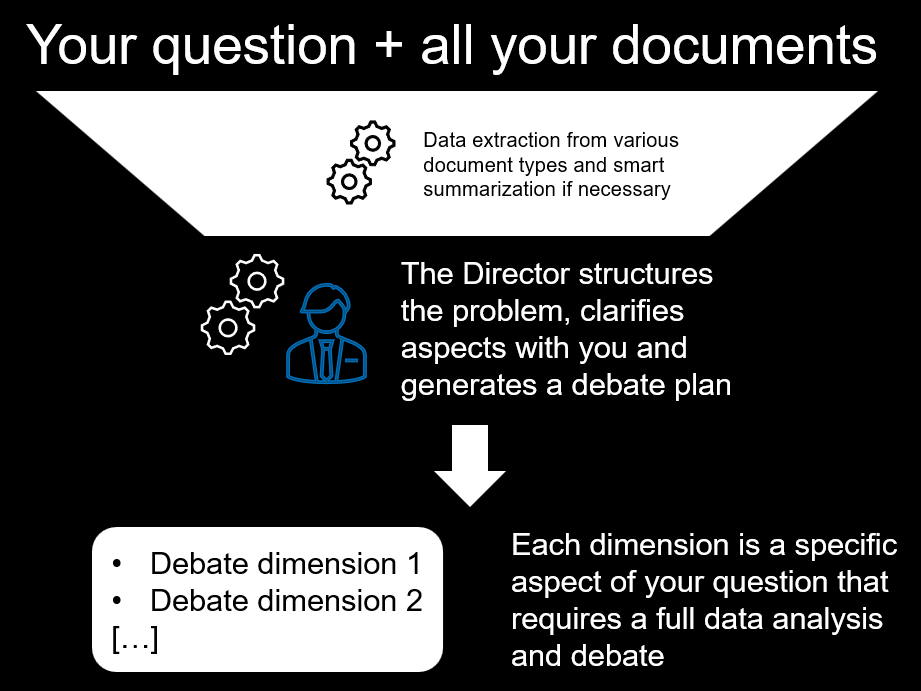
Submit your question and supporting documents. The Director generates a structured debate plan with specific dimensions to examine.

Director generates debate plan
2

Iterative Contradiction

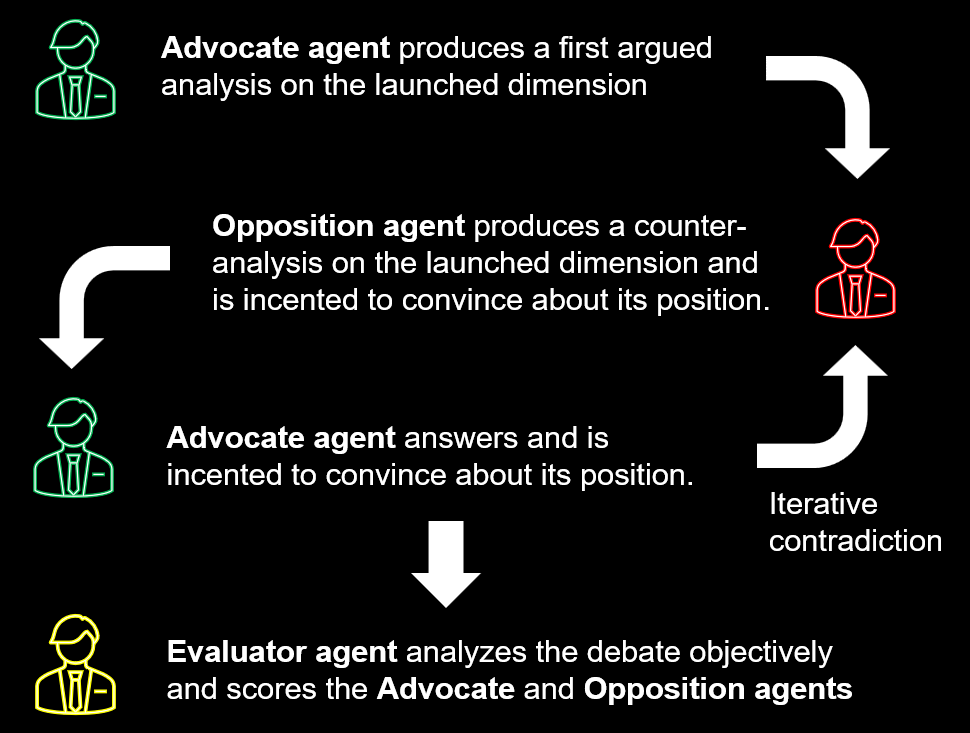
For each dimension, independently-trained AI agents debate: Advocate defends, Opposition attacks. Neither can agree to disagree.

Structured debate between agents
3

Web Search & Grounding

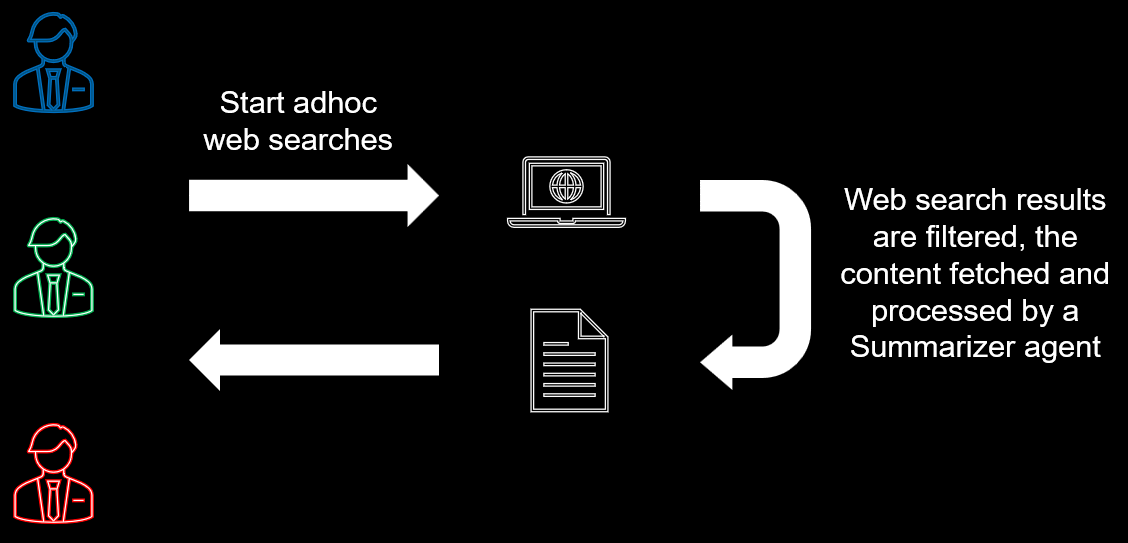
Arguments are grounded in current facts through live web research, not just training data. A Summarizer agent processes and verifies sources.

Web search grounding module
4

Calculation Agent

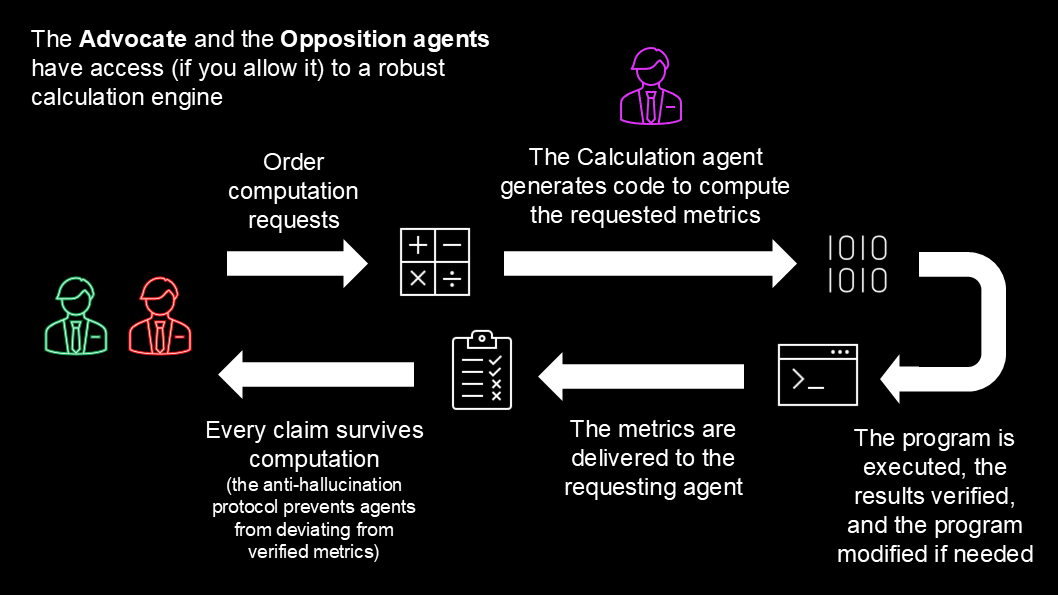
When financial models or spreadsheets are uploaded, the Calculation Agent processes them to generate quantitative insights.

Calculation agent module
5

Decision-Ready Report

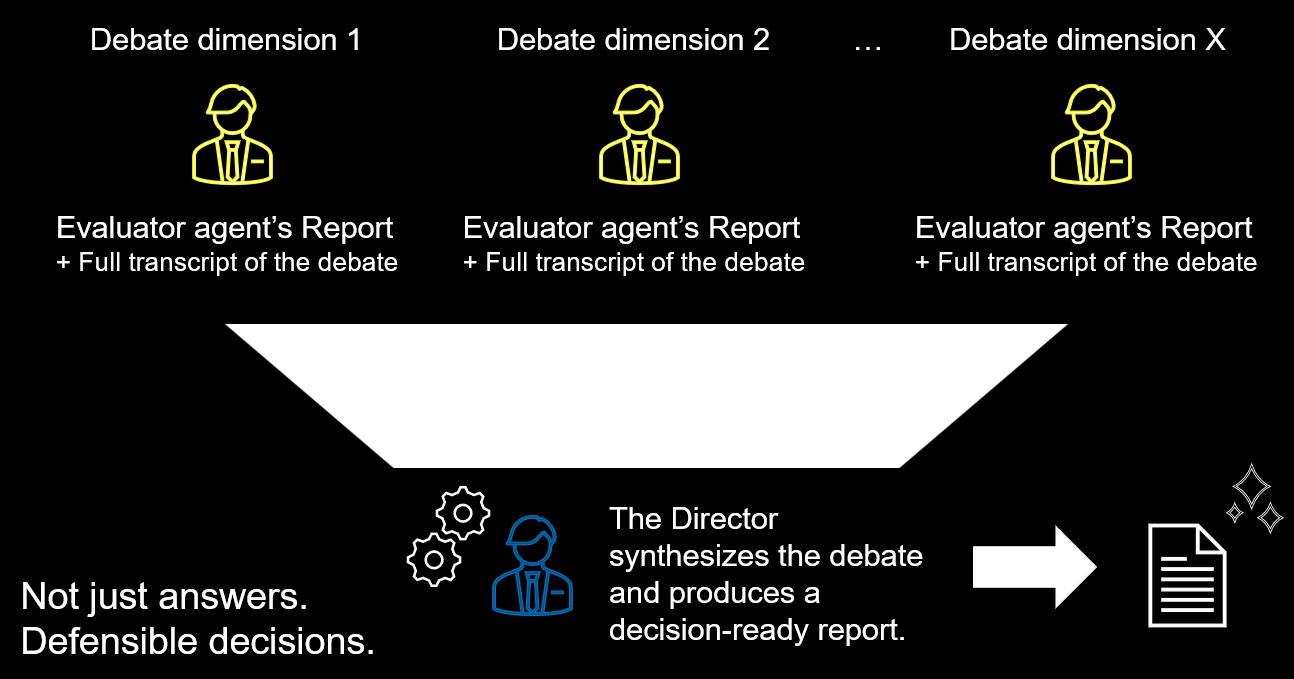
The Director synthesizes all debates into a comprehensive report with scoring, rationale, and what remains uncertain.

Final synthesis report
Deep dive into methodology →

What a single analysis delivers

"Should Nexora AG proceed with the acquisition of Luminos Biochem, Inc. at the proposed enterprise value of $485M?"

A consulting firm submitted financials, and context. arbitrIQ examined 4 dimensions with structured contradiction across each.

184K
Characters transcript
70
Pages of analysis
6
Page exec report
See Full Example
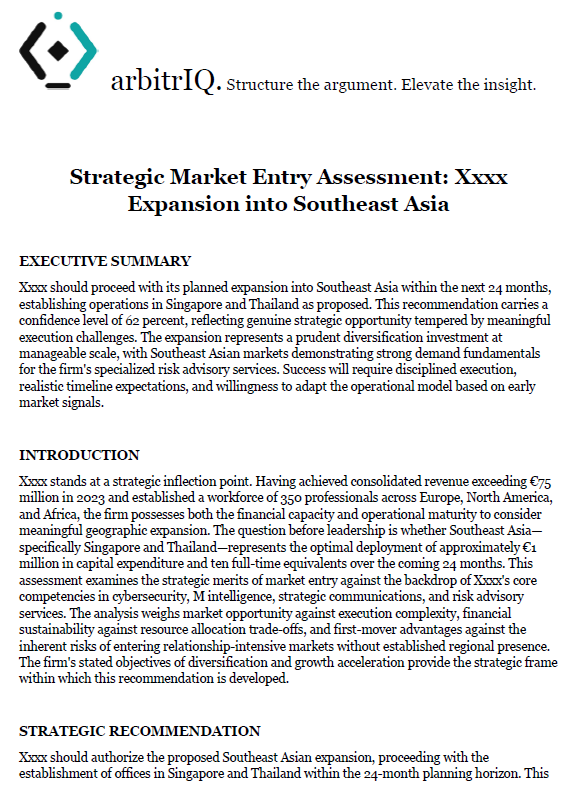
Example arbitrIQ executive report

Explore further

Founding Customer Program Open

Early adopters shape the roadmap and receive permanent benefits — 50% off for life, direct roadmap input, and priority support. Learn more

Ready to elevate your decisions?

Run your first strategic decision through arbitrIQ.

Launch arbitrIQ

Analysis informs decisions. Governance protects them.